
Divine Choreography
From Glacier
to Your Table
This is not agriculture. This is ten thousand years of mountains, monsoons, soil, and souls choreographed into a single grain of Basmati.
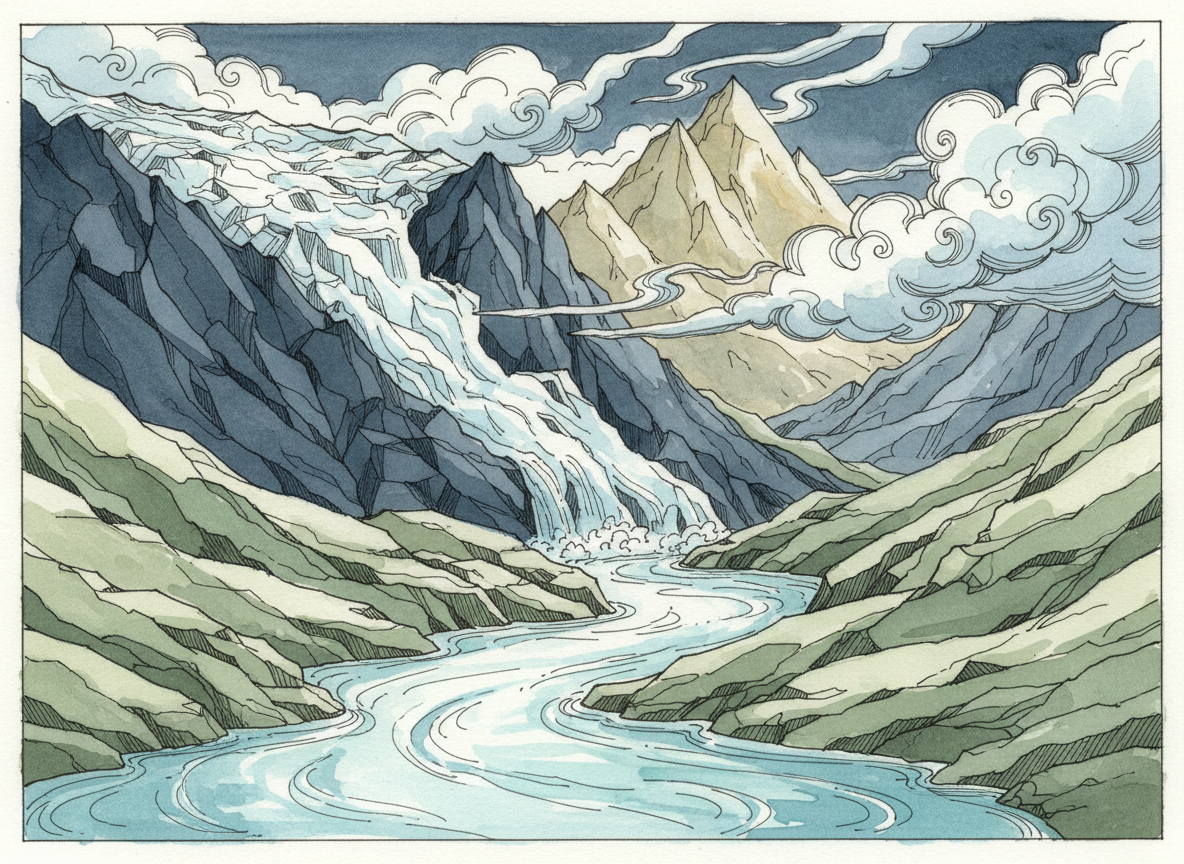
Where it begins
The The Mountain
The Himalayas did not form overnight. Over millions of years, the collision of the Indian and Eurasian tectonic plates thrust peaks above the clouds. Glaciers formed. Minerals concentrated. Ancient rock dissolved into water over centuries. The Indus, Jhelum, Chenab, Ravi, and Sutlej — the five rivers of Punjab — carry this mineral wealth from the mountains to the plains every year, in a cycle so old it predates civilization.
Glacial water carries minerals formed over 50 million years
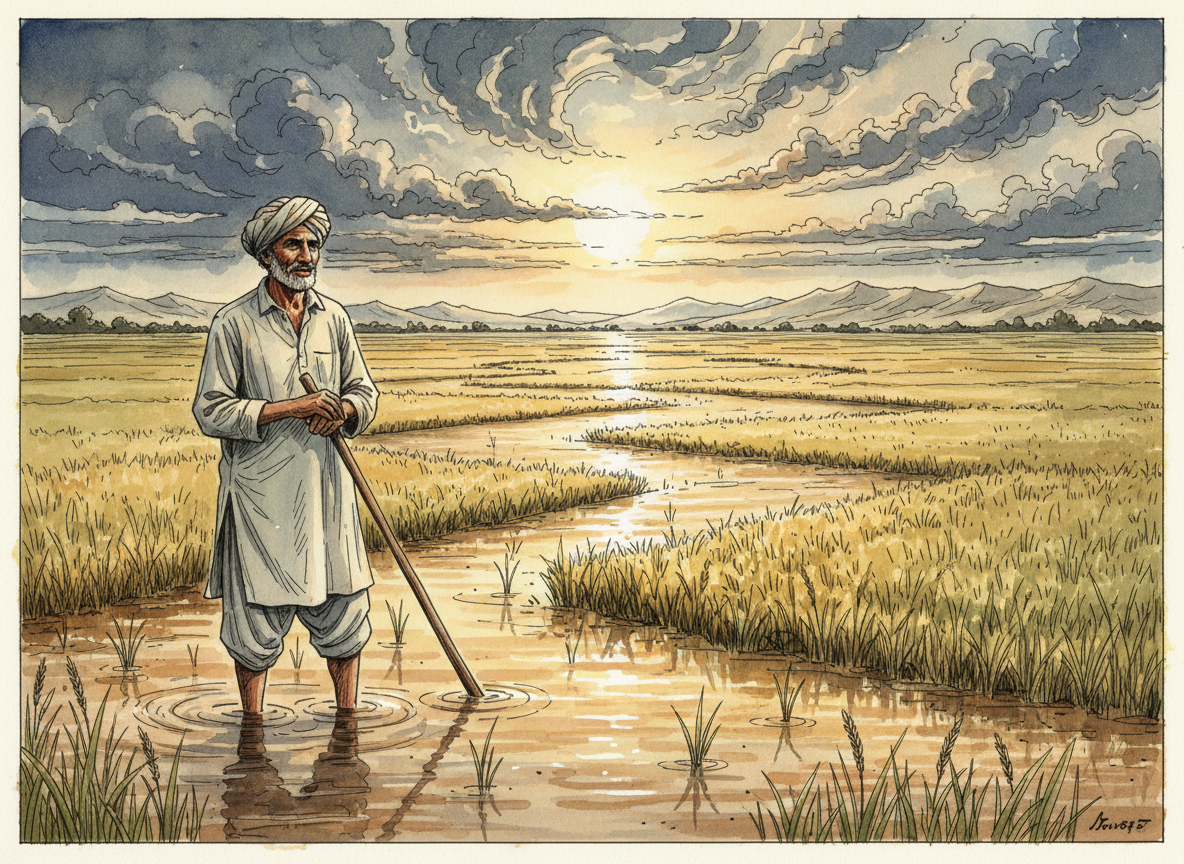
Nature's blessing
The The Monsoon
The Indian Monsoon is one of the most complex weather systems on earth. When it arrives in Punjab — typically in July — it does something extraordinary: it floods the rice paddies at precisely the right moment for Basmati to grow. Not too much water, not too little. The Monsoon is not random. It is the same reliable seasonal presence that has fed Pakistan's rice farmers for ten thousand years. The glacier feeds the rivers. The monsoon feeds the fields.
Punjab means 'land of five waters' in Persian
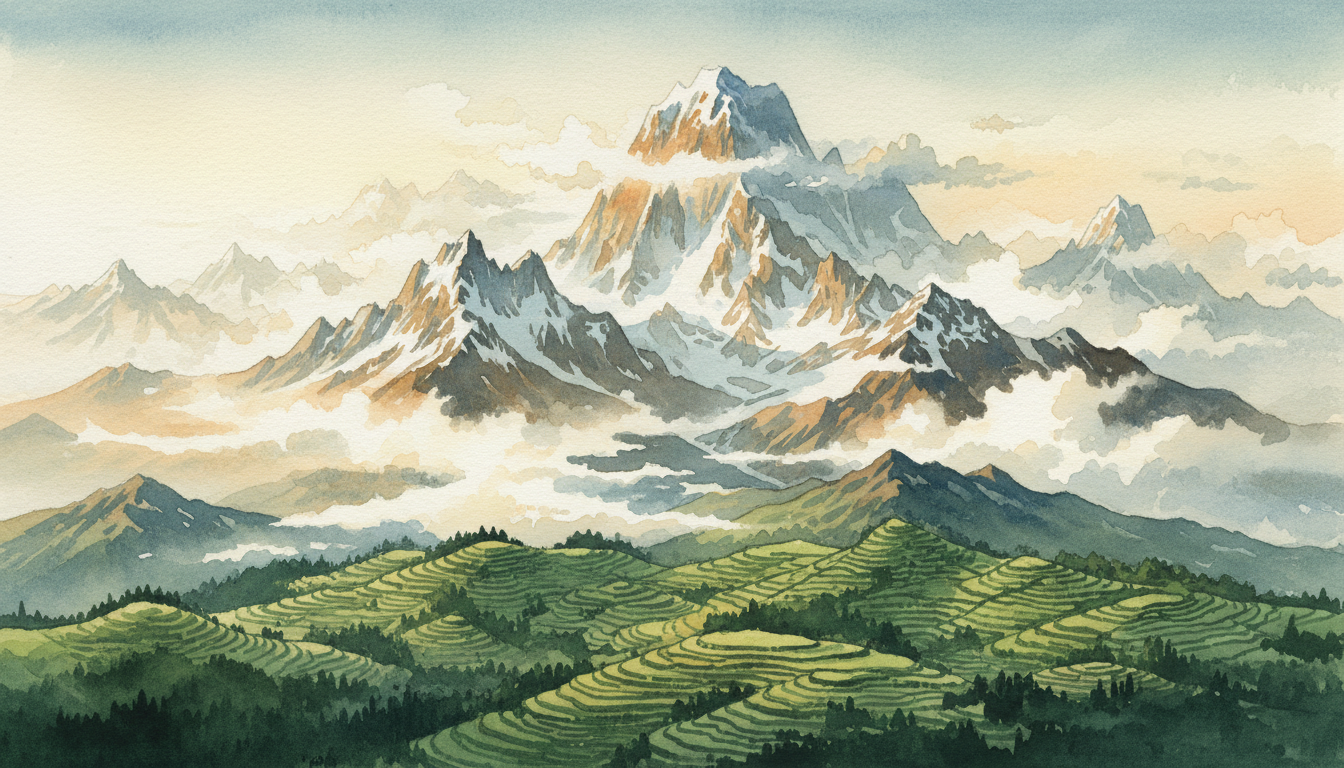
Punjab's mineral gift
The The Soil
The alluvial soil of Punjab is unlike any other on earth. Deposited by the five rivers over millennia, it is rich in precisely the minerals that Basmati rice needs to develop its characteristic long grain, its aromatic compounds, and its unique texture when cooked. The soil of Punjab does not just grow rice — it sculpts it. The mineral profile of the water, the unique bacterial ecology of the flooded fields, the specific clay composition — these create conditions that cannot be replicated in a laboratory or duplicated in another country.
Basmati can only be called Basmati if grown in specific South Asian regions
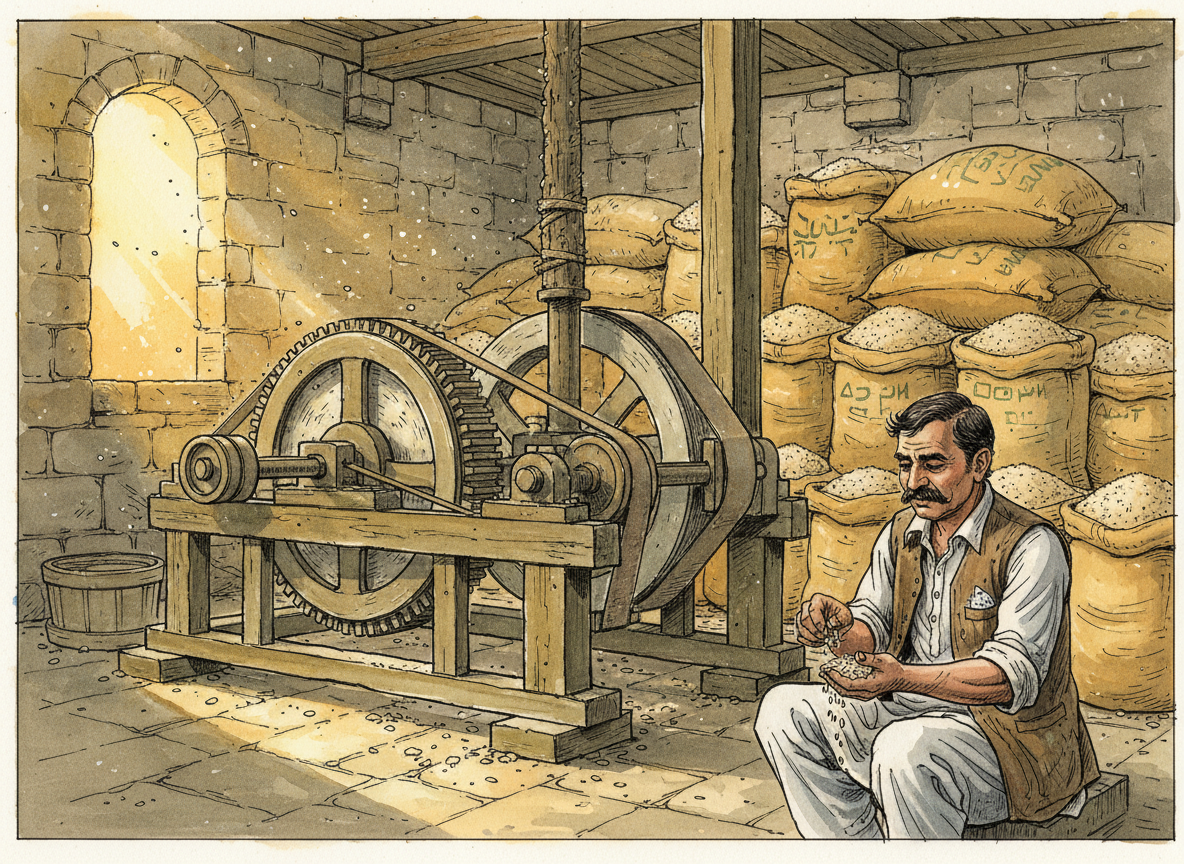
Fifteen years of listening
The The Soul
Hawk Rice Mills opened in 2009. For fifteen years, we have learned one craft: to listen to the grain. When to age it, how to polish it, when it is ready to be packaged. The miller who rushes this process produces rice that looks the same but cooks differently, smells different, tells a different story. We do not rush. We have developed the patience that the mountains taught the rivers, that the rivers taught the soil, that the soil taught the grain. Mountain Feather is not just a product. It is a fifteen-year education.
Aged basmati has more concentrated aromatic compounds
Our Timeline
Fifteen Years of
Paying Attention
Hawk Rice Mills founded in Punjab
Expanded milling capacity, began aging program
Mountain Feather brand concept developed
Aflatoxin testing program initiated
Mountain Feather brand launched
Export begins — carrying Pakistan's story to the world